
Living with back pain from a herniated disc (slipped disc) disrupts work, sleep, and comfort. Many people seek safe ways to heal and move again. Physiotherapy for a herniated disc offers a clear path to recovery through guided exercise and educational care. Now you might be wondering, “How Can Physiotherapy Help a Slipped Disc?”
Well, access to physiotherapy treatment in Winnipeg helps residents manage pain, restore strength, and return to valued activities. With a patient-focused approach, therapists build practical plans that respect goals, health history, and daily demands today.
What Is a Herniated Disc?
A herniated disc happens when the soft centre of the spinal disc gently pushes through a weakened outer layer. This can press on nearby nerves and cause pain or numbness. Symptoms often affect the neck or lower back. They may spread into the arms or legs. Simple actions such as bending, lifting, or sitting for long periods can become difficult.
While rest can ease discomfort at first, long periods of inactivity may slow recovery. Movement, when guided, supports healing. This is where structured care becomes important. Physical therapy for a herniated disc focuses on restoring function while protecting the spine.
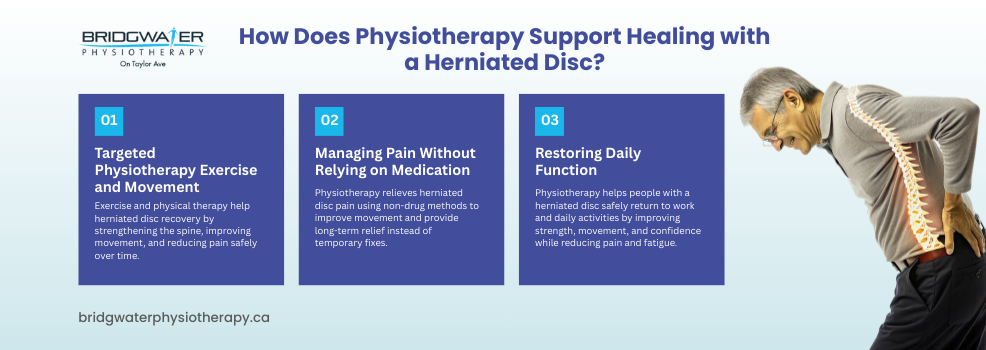
How Does Physiotherapy Support Healing with a Herniated Disc?
The goal of physiotherapy is to ease pain, help you move more comfortably, and reduce the chance of the problem coming back. Treatment plans are tailored to each person. A therapist first completes a detailed assessment. This includes posture, range of motion, strength, and nerve function. Based on these findings, a clear plan is created.
Physiotherapy for a herniated disc often begins with pain control. Gentle manual therapy, heat or cold, and specific positioning can reduce pressure on irritated nerves. As pain settles, movement becomes the focus. Controlled exercises help restore flexibility and build support around the spine.
Targeted Physiotherapy Exercise and Movement
Exercise is central to recovery from a herniated disc. Programs usually include stretching, strengthening, and stability work. Gentle stretches reduce stiffness in tight muscles. Strengthening focuses on the core, hips, and back. These muscles support the spine during daily tasks.
Stability training improves control and balance. It teaches the body to move efficiently. This reduces strain on injured tissues. Over time, people regain trust in their movements. Daily activities become easier and less painful.
Physical therapy for a herniated disc also includes graded activity. This means progress happens in small, safe steps. As strength improves, exercises become more challenging. This steady approach lowers the risk of flare-ups and supports long-term success.
Managing Pain Without Relying on Medication
Many people prefer to avoid long-term medication use to treat a herniated disc. Physiotherapy offers non-drug options for pain relief. Therapists may use hands-on methods to relax tight muscles and improve joint motion. Modalities such as heat, ice, or gentle electrical stimulation may also help.
These options support comfort while the body heals. By addressing the primary causes of pain, physiotherapy for a herniated disc can reduce reliance on short-term fixes. The goal is lasting improvement, not temporary relief.
Restoring Daily Function
A herniated disc can limit work, hobbies, and family time. Physiotherapy focuses on restoring these activities. Treatment plans include task-specific training. For example, someone who sits at a desk learns better posture and breaks.
A person with a physical job learns safe lifting and movement strategies. This practical focus helps people return to daily life with confidence. Over time, strength and endurance improve. Fatigue decreases. Many people find they can manage their symptoms and stay active.
Long-Term Benefits of Physiotherapy for a Herniated Disc
Beyond pain relief, physiotherapy improves overall movement quality. People often notice better posture, balance, and strength. These gains support active living and reduce the risk of other injuries. By learning how the body works, individuals become partners in their own care. This sense of control is empowering.
When to Seek Physiotherapy for a Slipped Disc?
You should consider physiotherapy as soon as you notice continuous back or neck pain. If discomfort lasts more than a few days or spreads into your arms or legs, professional care can help prevent worsening.
Seek immediate medical help if you experience weakness, numbness, or serious changes in bladder or bowel control. For most people, physiotherapy is highly effective, and surgery is rarely necessary.
Major Takeaways: Physical Therapy for Herniated Disc
A herniated disc can be limiting; however, recovery is possible. Physiotherapy for a herniated disc offers a safe, effective path forward. Through careful assessment and targeted exercise, people regain comfort and confidence.
At Bridgwater Physiotherapy, we offer evidence-based physical therapy for a herniated disc in Winnipeg. Our physiotherapists help you recover from a slipped disc while also guiding you on how to protect your spine and prevent future injuries. Contact us today!
Frequently Asked Questions
Is Physio Good for a Herniated Disc?
Yes. Physiotherapy helps reduce pain, improve movement, and support healing through guided exercises and hands-on treatment.
How Long Does a Herniated Disc Take to Heal with Physical Therapy?
Most people feel improvement within a few weeks. Full recovery can take several months. This time period depends on the severity.
How Many Physio Sessions Are Needed for a Herniated Disc?
Most cases need about 8 to 12 sessions. More complex cases or post-surgery recovery may require additional visits.