An ACL injury can affect your ability to walk, exercise, or return to sport with confidence. When deciding between surgery and physiotherapy, the right option depends on factors such as knee stability, activity level, lifestyle demands, and recovery goals. Knowing the benefits and limitations of each approach can help you make a more informed decision.
When Is ACL Surgery vs Non-Surgery the Best Option for You?
The choice between ACL surgery vs non-surgery depends on how stable your knee feels and the activities you plan to return to after recovery. Surgery is often considered for people who participate in sports that involve frequent pivoting, cutting, or sudden changes in direction. It may also be recommended when the knee repeatedly gives way during daily activities.
In other cases, non-invasive physiotherapy may be an effective option. Many people with certain ACL injuries can regain strength, improve stability, and return to their normal activities through a structured rehabilitation program. A physiotherapist in Winnipeg can assess your movement, strength, and functional goals to help determine which treatment path may be appropriate.
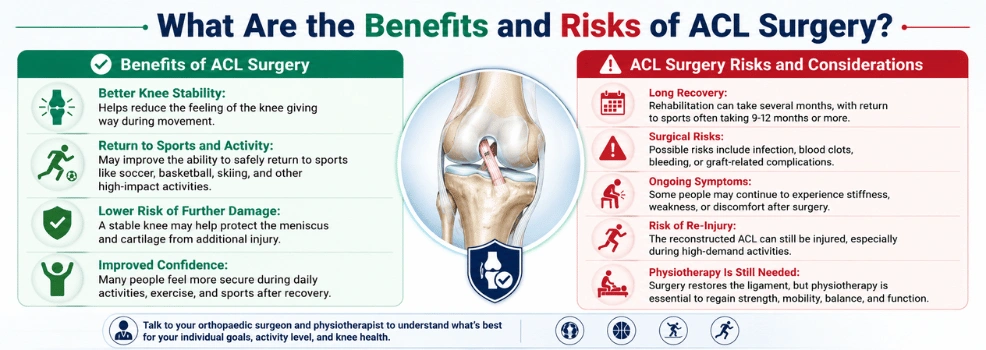
What Are the Benefits and Risks of ACL Surgery?
ACL reconstruction surgery replaces the torn ligament with a graft to improve knee stability. It is often recommended for people who want to return to pivoting sports, physically demanding activities, or who experience frequent knee instability.
Benefits of ACL Surgery
- Better Knee Stability: Helps reduce the feeling of the knee giving way during movement.
- Return to Sports and Activity: May improve the ability to safely return to sports like soccer, basketball, skiing, and other high-impact activities.
- Lower Risk of Further Damage: A stable knee may help protect the meniscus and cartilage from additional injury.
- Improved Confidence: Many people feel more secure during daily activities, exercise, and sports after recovery.
ACL Surgery Risks and Considerations
- Long Recovery: Rehabilitation can take several months, with return to sports often taking 9-12 months or more.
- Surgical Risks: Possible risks include infection, blood clots, bleeding, or graft-related complications.
- Ongoing Symptoms: Some people may continue to experience stiffness, weakness, or discomfort after surgery.
- Risk of Re-Injury: The reconstructed ACL can still be injured, especially during high-demand activities.
- Physiotherapy Is Still Needed: Surgery restores the ligament, but physiotherapy is essential to regain strength, mobility, balance, and function.
The right treatment depends on your knee stability, activity level, and recovery goals. A Knee physiotherapist in Winnipeg can assess your condition. They can help determine whether surgery or a non-invasive rehabilitation approach may be the better option for you.
Can Physiotherapy Treat an ACL Injury Without Surgery?
For some individuals, yes. Conservative management of ACL tear injuries focuses on improving knee function without surgical intervention. Physiotherapy works by strengthening the muscles that support the knee, improving balance, and enhancing movement control. These improvements can help compensate for the injured ligament and improve overall joint stability.
One advantage of ACL injury management through physiotherapy is that it is non-invasive and avoids the risks associated with surgery. Many people can successfully return to work, recreational activities, and certain sports through a well-designed rehabilitation program.
However, physiotherapy may not be the best solution for everyone. If significant instability remains despite rehabilitation, surgical treatment may still be considered.
| Treatment Option | Potential Benefits | Considerations |
| ACL Surgery | May improve stability for high-demand sports and activities | Requires surgery, recovery time, and rehabilitation |
| Physiotherapy | Non-invasive treatment focused on strength and stability | May not fully address instability in every case |
What Does ACL Rehabilitation Look Like for Each Option?
Rehabilitation plays a major role in recovery regardless of which treatment path you choose.
Following surgery, rehabilitation generally focuses on reducing swelling, restoring range of motion, rebuilding strength, and gradually returning to activity. Recovery can take several months and often continues long after the surgical procedure.
For people pursuing conservative management of ACL tear injuries, rehabilitation begins immediately. Treatment may include strengthening exercises, balance training, movement retraining, and sport-specific exercises when appropriate.
Patients receiving physiotherapy in Winnipeg often follow progressive rehabilitation programs. These programs are adjusted based on recovery progress, activity goals, and assessment findings.
How Do You Decide Between Surgery and Physiotherapy?
The best treatment option depends on your individual situation rather than a single recommendation that applies to everyone. Factors such as age, activity level, occupation, sports participation, knee stability, and personal goals all influence the decision. Some people benefit from surgical reconstruction, while others achieve excellent outcomes through non-invasive physiotherapy alone.
Working with an experienced physiotherapist in Winnipeg and your healthcare team may help you understand the advantages and limitations of each option. A thorough assessment provides valuable information that supports an informed treatment decision.

ACL Injury Surgery vs Physiotherapy: Which Treatment Option Is Right for You?
There is no universal answer when comparing surgery vs physiotherapy for an ACL injury. The most appropriate treatment depends on your symptoms, stability, activity demands, and long-term goals. Both surgical reconstruction and conservative rehabilitation can be effective when selected for the right individual and supported by a structured recovery plan.
At Bridgwater Physiotherapy, we provide evidence-based ACL injury management designed around your specific needs. Whether you are considering surgery or exploring non-invasive physiotherapy treatment, our team can assess your condition and guide you through your recovery options. Book an appointment today to discuss your treatment plan with an experienced physiotherapist in Winnipeg.