A sports-related meniscus tear can affect your ability to train, compete, and move comfortably. Choosing between surgery and physiotherapy depends on the type of tear, knee stability, symptoms, and activity goals. While some tears may require surgical treatment, many can improve through structured rehabilitation. Understanding the differences may help you make a more informed recovery decision.
How Do You Determine If a Meniscus Tear Requires Surgery or Non-Surgical Care?
Whether a meniscus tear needs surgery depends on several factors, including the type of tear, your symptoms, and how well your knee functions. Not every meniscus tear requires an operation.
Some tears, especially smaller and stable ones, may improve with physiotherapy. The outer part of the meniscus has a better blood supply, which may support healing in certain cases. Physiotherapy focuses on improving strength, mobility, and knee stability to help you return to daily activities and sports safely.
Surgery may be considered if the tear is large, unstable, or causes ongoing symptoms. Signs such as knee locking, catching, or repeated episodes of giving way may indicate that further medical assessment is needed.
A physiotherapist in Winnipeg can evaluate your knee and discuss your activity goals. They can help determine whether conservative rehabilitation is a suitable option or if referral for further medical evaluation may be appropriate.
When Is Physiotherapy for a Meniscus Tear Enough?
Physiotherapy may be enough for a meniscus tear when the knee remains stable and functions well during daily activities. Many sports-related meniscus tears can improve through conservative rehabilitation, allowing individuals to regain strength and movement without surgery. Physiotherapy is often considered when:
- The tear is stable and does not cause locking, catching, or giving way.
- Pain and swelling are manageable.
- The knee remains functional during everyday activities.
- Strength, mobility, and movement patterns can improve through rehabilitation.
A structured physiotherapy program focuses on improving knee strength, flexibility, balance, and stability. Treatment may include exercises, manual therapy, activity modification, and a gradual return to sport.
Strengthening the muscles around the knee may help reduce stress on the meniscus and support better movement. For athletes and active individuals, sports physiotherapy Winnipeg programs often include sport-specific exercises that progress as recovery improves.

What Are the Benefits and Risks of Meniscus Tear Surgery vs Physiotherapy?
When comparing meniscus tear surgery vs physiotherapy, there is no one-size-fits-all answer. The best treatment depends on the tear’s location and severity, your symptoms, activity level, and recovery goals.
Many stable meniscus tears respond well to physiotherapy, which focuses on restoring strength, mobility, balance, and knee function without surgery. Surgical treatment may be recommended for certain traumatic tears, persistent pain, or mechanical symptoms such as locking and catching.
| Treatment Option | Potential Benefits | Considerations |
| Physiotherapy | Non-invasive, improves strength and function, supports return to activity, and avoids surgical risks. | Requires commitment to rehabilitation and may not resolve all symptoms in every case. |
| Surgery | May address specific tear patterns and mechanical symptoms that limit knee function. | Involves recovery time, rehabilitation, and potential surgical risks. |
A professional assessment may help determine the most suitable recovery path for your injury.
Can Physical Therapy Make a Meniscus Tear Worse?
Physical therapy is generally designed to support recovery from a meniscus tear. However, symptoms may worsen if exercises are not appropriate for the injury or are progressed too quickly. The effect of rehabilitation depends on factors such as the type of tear, symptom severity, and individual response to treatment.
A licensed physiotherapist can assess knee function and develop a program according to your condition and recovery goals. If pain, swelling, locking, or instability increase during rehabilitation, further medical assessment may be needed. Always follow guidance from a licensed healthcare professional to determine the safest treatment approach for your situation.
For a more detailed discussion, see our article on whether physical therapy can worsen a meniscus tear and understand the impact of physical therapy on meniscus tears.
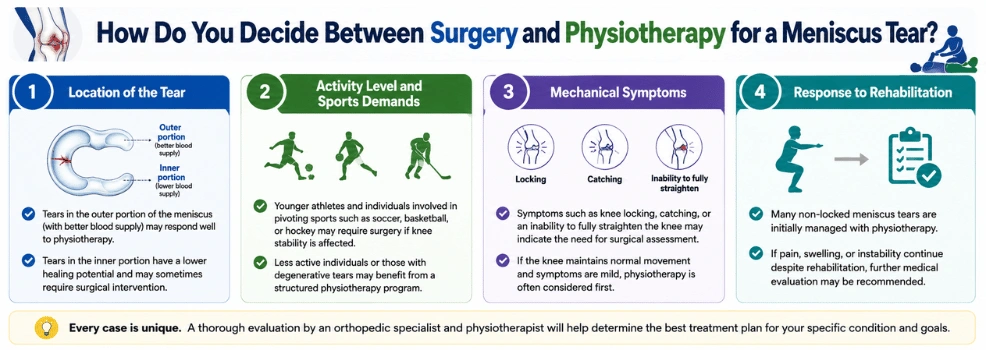
How Do You Decide Between Surgery and Physiotherapy for a Meniscus Tear?
The right treatment depends on several factors, including the type of tear, your symptoms, and your activity level. Key factors that healthcare professionals consider include:
1. Location of the Tear
- Tears in the outer portion of the meniscus (with better blood supply) may respond well to physiotherapy.
- Tears in the inner portion have a lower healing potential and may sometimes require surgical intervention.
2. Activity Level and Sports Demands
- Younger athletes and individuals involved in pivoting sports such as soccer, basketball, or hockey may require surgery if knee stability is affected.
- Less active individuals or those with degenerative tears may benefit from a structured physiotherapy program.
3. Mechanical Symptoms
- Symptoms such as knee locking, catching, or an inability to fully straighten the knee may indicate the need for surgical assessment.
- If the knee maintains normal movement and symptoms are mild, physiotherapy is often considered first.
4. Response to Rehabilitation
- Many non-locked meniscus tears are initially managed with physiotherapy.
- If pain, swelling, or instability continue despite rehabilitation, further medical evaluation may be recommended.
Meniscus Tear from Sports: Choosing the Right Recovery Path
There is no universal answer when comparing meniscus surgery vs physical therapy. The appropriate treatment depends on the characteristics of the tear, your symptoms, activity demands, and long-term goals. Both surgery and physiotherapy can play an important role in recovery when selected for the right individual.
At Bridgwater Physiotherapy, we provide evidence-based rehabilitation for sports injuries and meniscus tears. Whether you are exploring non-invasive treatment options or recovering after surgery, our team can help guide your recovery plan. Book an appointment today to discuss your treatment options with an experienced physiotherapist in Winnipeg.