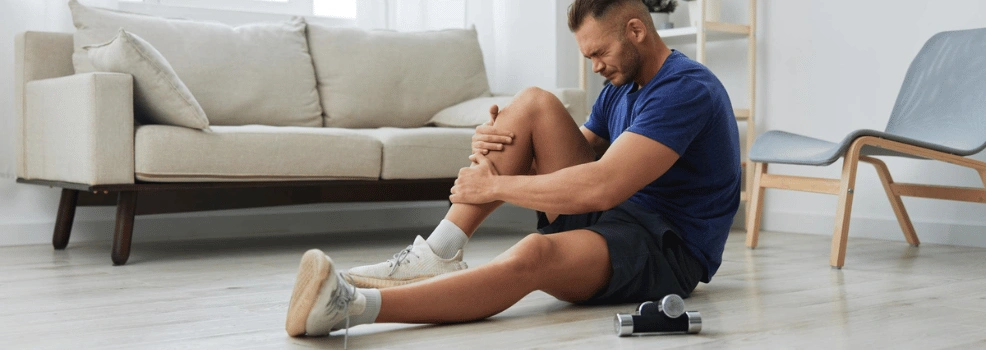
If your knee pain has not improved despite rest and stretching, there may be more causes of your symptoms than simple muscle tightness or overuse. While rest and flexibility exercises can help some conditions, they do not address every source of knee pain. Understanding what may be limiting your recovery can help you take the next step toward lasting improvement.
Why Is Your Knee Pain Not Improving After Rest and Stretching?
Many people assume that knee pain will settle with reduced activity and a few weeks of stretching. While that approach may help minor strains, it does not address every cause of knee discomfort.
If your knee pain is not improving after rest, factors such as muscle weakness, movement patterns, or joint-related issues may be contributing to your symptoms. These underlying issues can continue to affect how your knee functions during daily activities. In these situations, reducing activity alone may not provide enough support for recovery.
Stretching can improve flexibility, but flexibility is only one part of how the knee functions. If the joint is experiencing excessive stress during walking, climbing stairs, running, or exercise, stretching alone may not resolve the problem. Knowing what is actually driving your symptoms is often the key to making progress.
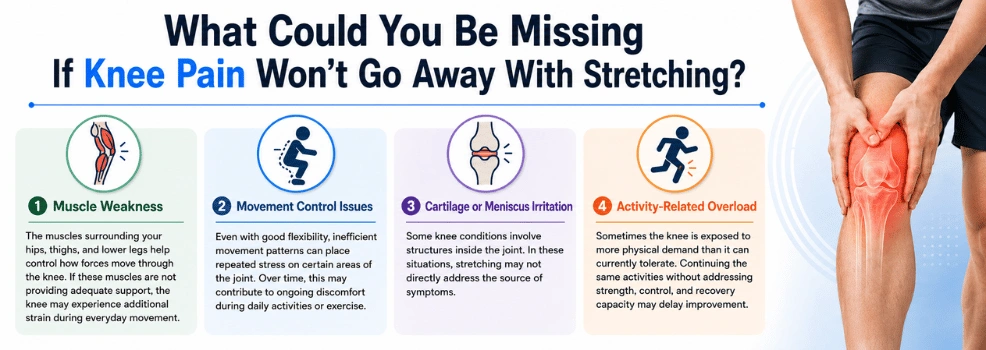
What Could You Be Missing If Knee Pain Won’t Go Away With Stretching?
When knee pain won’t go away with stretching, there is often another factor contributing to the discomfort.
Muscle Weakness
The muscles surrounding your hips, thighs, and lower legs help control how forces move through the knee. If these muscles are not providing adequate support, the knee may experience additional strain during everyday movement.
Movement Control Issues
Even with good flexibility, inefficient movement patterns can place repeated stress on certain areas of the joint. Over time, this may contribute to ongoing discomfort during daily activities or exercise.
Cartilage or Meniscus Irritation
Some knee conditions involve structures inside the joint. In these situations, stretching may not directly address the source of symptoms.
Activity-Related Overload
Sometimes the knee is exposed to more physical demand than it can currently tolerate. Continuing the same activities without addressing strength, control, and recovery capacity may delay improvement.
These are some of the chronic knee pain causes that may require more than home management alone.
Why Can Too Much Rest Sometimes Slow Knee Pain Recovery?
Although temporary rest can be helpful after an injury flare-up, prolonged inactivity is not always the best long-term solution. Extended periods of reduced activity may contribute to decreased muscle strength, reduced joint tolerance, and lower overall physical conditioning. When activity is eventually resumed, the knee may still struggle to manage everyday demands.
This does not mean you should push through pain. Instead, many recovery plans focus on gradually reintroducing appropriate movement while respecting symptom levels.
Finding the right balance between protection and activity is often more effective than complete inactivity for extended periods.
How Can Physiotherapy Help When Knee Pain Is Not Improving?
When symptoms continue despite rest and stretching, a professional assessment can help identify factors that may be limiting recovery. A physiotherapist in Winnipeg can evaluate how your knee functions during movement and identify areas that may require attention. This may include assessing strength, mobility, balance, walking mechanics, and activity demands.
Physiotherapy may include treatments to address factors that can be contributing to your knee pain, such as:
- Strengthening exercises
- Movement retraining
- Manual therapy
- Balance and stability training
- Activity modification strategies
- Progressive return-to-exercise programs
The goal of physiotherapy treatment in Winnipeg is not simply to reduce symptoms. It is also to improve how the knee manages physical demands during daily life, work, and recreational activities. For individuals recovering from sports-related concerns, a sports injury clinic Winnipeg residents trust can provide rehabilitation that reflects their specific activity goals.
When Should You See a Physiotherapist for Knee Pain?
It may be worth seeking professional advice if:
- Your symptoms are not improving after several weeks
- Knee pain returns whenever you become active
- Walking, stairs, or exercise remains uncomfortable
- Swelling continues to occur
- Your knee feels unstable
- Stretching has provided little or no improvement
Early assessment can help identify potential barriers to recovery and provide guidance on the most appropriate next steps.
Knee Pain Not Improving After Rest and Stretching? Here’s Your Next Step
When knee pain does not improve after rest becomes an ongoing concern, it may be a sign that the issue requires further attention. Temporary activity modification and flexibility exercises may not always be enough to address the underlying problem. Factors such as strength deficits, movement patterns, joint mechanics, and activity demands can all influence recovery.
At Bridgwater Physiotherapy, our team provides evidence-based assessments and rehabilitation programs designed around your individual needs. If your symptoms are limiting your daily activities, work, or exercise routine, an experienced physiotherapist in Winnipeg can help determine what may be contributing to your knee pain and discuss appropriate treatment options.