Key Takeaways
- The knee-to-chest stretch and Cat Cow stretch safely improve flexibility and reduce stiffness.
- Keep lower back stretches for pain control and comfort. Never force deep movements.
- Common mistakes to avoid include bouncing, holding your breath, and ignoring sharp pain.
- Physiotherapy exercises for lower back pain combine gentle mobility with core stability exercises.
- Stop stretching and consult a professional if you experience leg numbness, tingling, or weakness.
There is no single best stretching exercise for lower back pain because the right movement often depends on how your muscles, joints, and spine respond to activity. Some stretches focus more on flexibility, while others help reduce stiffness and improve movement control. Gentle stretching for lower back discomfort may help improve mobility and reduce tension during daily activities when performed with proper technique and consistency.
Best Lower Back Stretches for Pain Relief at Home
Many lower back pain exercises at home focus on reducing muscle tightness and improving movement control. The best stretches for lower back pain should feel controlled and comfortable without creating sharp pain.
Knee-to-Chest Stretch
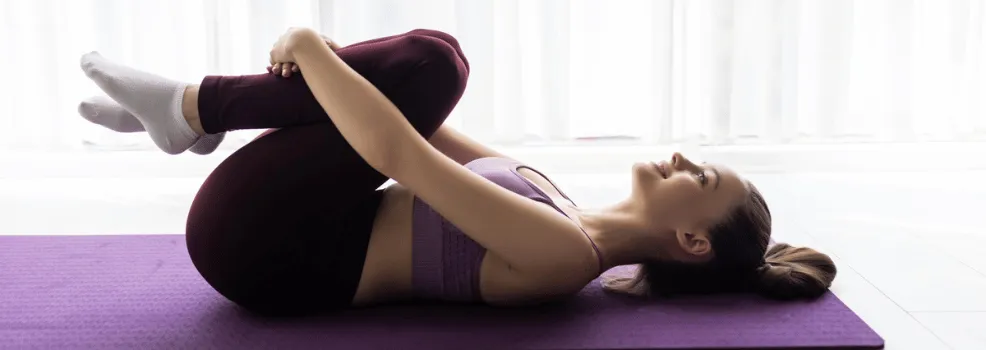
The knee-to-chest stretch helps relax tight lower back muscles and may improve lumbar spine mobility. How to do it:
- Lie on your back with both knees bent
- Pull one knee gently toward your chest
- Hold for 20 to 30 seconds
- Repeat on both sides
This stretch is commonly used during lower backache treatment because it places minimal stress on the spine while improving flexibility.
Cat Cow Stretch
The Cat Cow stretch improves movement through the lumbar spine and may help reduce stiffness after long periods of sitting. How to do it:
- Start on your hands and knees
- Slowly arch your back upward
- Then lower your stomach while lifting your chest slightly
- Repeat the movement slowly for 30 to 60 seconds
This stretching exercise for lower back pain is often included in physiotherapy exercises for lower back mobility because it encourages gentle spinal movement.
Pelvic Tilt Exercises
Pelvic Tilt exercises may help improve core control and reduce tension around the lower back. How to do it:
- Lie on your back with knees bent
- Tighten your abdominal muscles
- Flatten your lower back gently against the floor
- Hold for a few seconds before relaxing
These movements are useful for people with reduced core stability, tolerance or stiffness after prolonged sitting.
Child’s Pose for Back Pain
Child’s Pose for back pain gently stretches the lower back, hips, and posterior chain tension areas. How to do it:
- Kneel on the floor
- Sit your hips back toward your heels
- Reach your arms forward
- Lower your chest comfortably toward the floor
This position may help stretch the lower back muscles to relieve lower back pain when the muscles feel tight after physical activity or long work hours.
Seated Lower Back Stretch
A seated lower back stretch may improve flexibility through the lower spine and surrounding muscles. How to do it:
- Sit upright in a chair
- Slowly rotate your upper body to one side
- Keep the movement controlled
- Hold briefly before switching sides
This stretch is often useful for people experiencing back pain from prolonged desk work or reduced daily movement.
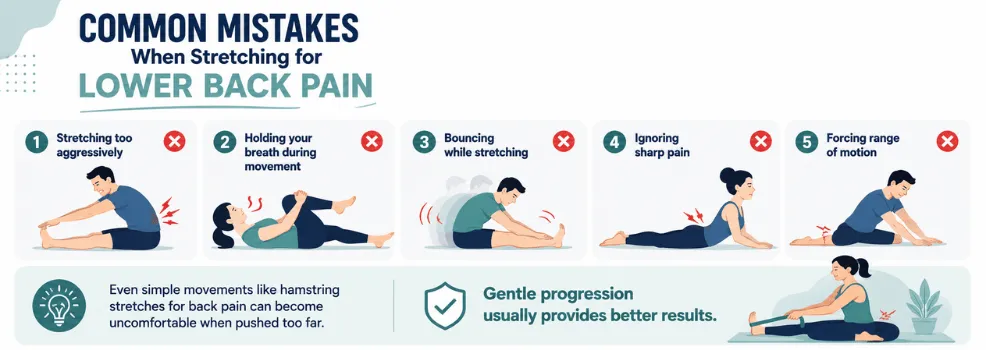
Common Mistakes When Stretching for Lower Back Pain
Stretching for lower back discomfort should feel controlled and steady. Certain mistakes may increase irritation instead of improving mobility. Common mistakes include:
- Stretching too aggressively
- Holding your breath during movement
- Bouncing while stretching
- Ignoring sharp pain
- Forcing range of motion
Even simple movements like hamstring stretches for back pain can become uncomfortable when pushed too far. Gentle progression usually provides better results.
Physiotherapy Exercises for Lower Back Pain
Effective physiotherapy exercises for lower back pain often combine stretching with controlled strengthening movements. The goal is to improve movement quality while reducing unnecessary stress on the lumbar spine.
| Exercise Type | Main Focus |
| Bird Dog exercise | Improve spinal control and balance |
| Core stability exercises | Support the lower back during movement |
| Lumbar spine stretches | Improve flexibility and mobility |
| Stretching for lower back muscles | Reduce tightness and stiffness |
| Sciatica pain relief movements | Reduce nerve-related tension |
The Bird Dog exercise is commonly used during lower back rehabilitation because it encourages controlled movement through the hips, abdomen, and lower spine. When performed correctly, it may help improve posture and spinal support during daily activities.
When Should You Stop Stretching and See a Physiotherapist?
Some symptoms should not be ignored during lower back stretches for pain relief. You should stop stretching and seek assessment if you notice:
- Pain travelling down the leg
- Numbness or tingling
- Weakness while walking
- Increased pain after stretching
- Difficulty standing upright
A physiotherapist in Winnipeg may assess movement restrictions, muscle tightness, and spinal mobility to create a personalized lower backache treatment plan.
The Bottom Line on Stretching Exercise for Lower Back Pain
The best stretching exercise for lower back pain is usually one that improves movement without increasing discomfort. Gentle movements such as the Cat Cow stretch, knee-to-chest stretch, and Pelvic Tilt exercises may help reduce stiffness and improve flexibility when performed consistently.
Lower back stretches for pain should feel controlled and comfortable rather than aggressive. If stretching no longer helps or symptoms begin affecting your daily movement, working with a physiotherapist in Winnipeg may help you find a safer and more personalized recovery approach.
Frequently Asked Questions
Some of the best stretches for lower back pain include the knee-to-chest stretch, the Cat Cow stretch, the Child’s Pose for back pain, and the seated lower back stretch. These movements may help improve flexibility and reduce muscle tightness when performed gently.
Morning stretches for lower back pain may help reduce stiffness that develops overnight. Gentle movements such as Pelvic Tilt exercises and Cat Cow stretch are commonly used to improve mobility early in the day.
Yes, lower back pain exercises at home may help improve movement and reduce tension around the lumbar spine. Controlled stretching for lower back muscles is often more effective when performed consistently instead of aggressively.
You should avoid stretching if movements increase pain sharply or cause numbness, tingling, or weakness in the legs. In these situations, assessment by a physiotherapist may be appropriate before continuing exercises.