Have you ever stood up from a low chair or bent down to pick something up off the floor only to hear a sudden click, snap, or loud pop from your knees?
If so, you are far from alone. That crackling, grinding, or popping noise is medically referred to as crepitus. While many assume it is an alarming sign of premature aging, that is rarely the case.
According to a landmark systematic review published in the British Journal of Sports Medicine (in collaboration with Arthritis Research Canada), knee crepitus is experienced by 41% of the general population. It affects individuals across the lifespan, from young athletes to seniors.
However, if your knee is popping with every step, or if the sound is accompanied by stiffness, catching, or pain, it shouldn’t be ignored. Let’s look at why your knees click, the underlying causes, and how targeted physical therapy can manage these joint symptoms.
Is a Knee Popping Sound Normal?
Yes, an occasional knee popping sound is completely normal and common. The British Journal of Sports Medicine meta-analysis found that roughly 36% of individuals with completely pain-free, uninjured joints experience regular knee crepitus.
However, the clinical picture shifts when structural changes or pain are present. The same data indicates that 81% of individuals diagnosed with knee osteoarthritis experience crepitus. Therefore, while occasional clicking is typically benign, frequent popping accompanied by discomfort may indicate an underlying joint or soft tissue condition that deserves a professional medical assessment.
When to Monitor Your Knee vs. When to Seek Care
| Symptom Present | Potential Clinical Meaning | Recommended Action |
| Occasional, painless clicking | Normal gas bubble collapse or physiologic tendon gliding | Continue normal activity; maintain flexibility. |
| Frequent clicking without pain | Mild tracking imbalances or muscle tightness | Focus on targeted mobility and balancing exercises. |
| Clicking is paired with gradual pain/swelling | Cartilage wear, early osteoarthritis, or chronic overloading | Schedule a knee pain physiotherapy evaluation. |
| A sudden, loud “pop” with sharp pain & swelling | Acute structural injury (e.g., ligament sprain or meniscus tear) | Seek immediate orthopedic or medical care. |
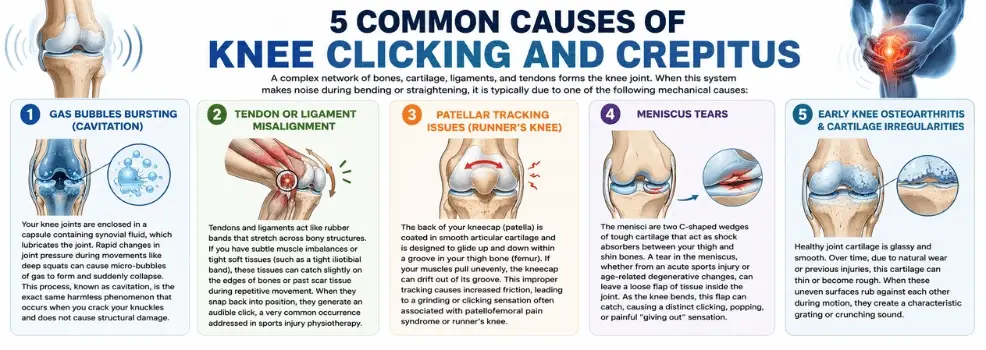
5 Common Causes of Knee Clicking and Crepitus
A complex network of bones, cartilage, ligaments, and tendons forms the knee joint. When this system makes noise during bending or straightening, it is typically due to one of the following mechanical causes:
1. Gas Bubbles Bursting (Cavitation)
Your knee joints are enclosed in a capsule containing synovial fluid, which lubricates the joint. Rapid changes in joint pressure during movements like deep squats can cause micro-bubbles of gas to form and suddenly collapse. This process, known as cavitation, is the exact same harmless phenomenon that occurs when you crack your knuckles and does not cause structural damage.
2. Tendon or Ligament Misalignment
Tendons and ligaments act like rubber bands that stretch across bony structures. If you have subtle muscle imbalances or tight soft tissues (such as a tight iliotibial band), these tissues can catch slightly on the edges of bones or past scar tissue during repetitive movement. When they snap back into position, they generate an audible click, a very common occurrence addressed in sports injury physiotherapy.
3. Patellar Tracking Issues (Runner’s Knee)
The back of your kneecap (patella) is coated in smooth articular cartilage and is designed to glide up and down within a groove in your thigh bone (femur). If your muscles pull unevenly, the kneecap can drift out of its groove. This improper tracking causes increased friction, leading to a grinding or clicking sensation often associated with patellofemoral pain syndrome or runner’s knee.
4. Meniscus Tears
The menisci are two C-shaped wedges of tough cartilage that act as shock absorbers between your thigh and shin bones. A tear in the meniscus, whether from an acute sports injury or age-related degenerative changes, can leave a loose flap of tissue inside the joint. As the knee bends, this flap can catch, causing a distinct clicking, popping, or painful “giving out” sensation.
5. Early Knee Osteoarthritis & Cartilage Irregularities
Healthy joint cartilage is glassy and smooth. Over time, due to natural wear or previous injuries, this cartilage can thin or become rough. When these uneven surfaces rub against each other during motion, they create a characteristic grating or crunching sound.
Note: Other less common conditions, such as Plica Syndrome (an inflammation of the protective joint lining folds), can also cause localized clicking inside the knee.
How Physiotherapy Can Help Reduce Knee Popping and Pain
Physiotherapy is widely recognized by clinical guidelines, including those from the Journal of Orthopaedic & Sports Physical Therapy (JOSPT), as a recommended conservative treatment option for many mechanical causes of knee pain and patellofemoral dysfunction.
While physical therapy cannot reverse structural conditions like advanced arthritis or loose mechanical bodies, it can significantly optimize joint mechanics to manage symptoms:
- Correcting Muscle Imbalances: Weakness in the quadriceps, hamstrings, or hip stabilizers (gluteus medius) forces the knee joint to absorb uneven forces. Guided strengthening shifts stress off the joint and onto the muscles.
- Improving Patellar Gliding: Through specialized manual therapy, patellar taping, and tailored movement training, a therapist helps the kneecap glide smoothly within its anatomical pathway.
- Restoring Tissue Flexibility: Stretching tight hip flexors, calves, and hamstrings reduces abnormal tension on the knee, eliminating the friction that causes tendons to snap.
How Long Does Knee Recovery Take?
Because every joint is structurally unique, recovery timelines vary based on the root cause of your crepitus. If your clicking is caused by minor soft tissue tightness or early tracking issues, you may experience reduced noise and improved comfort within 4 to 6 weeks of consistent conservative care. For chronic conditions like meniscus tears or early osteoarthritis, rehabilitation focuses on long-term management; noticeable changes in stability and pain reduction typically develop over 8 to 12 weeks of structured strengthening.
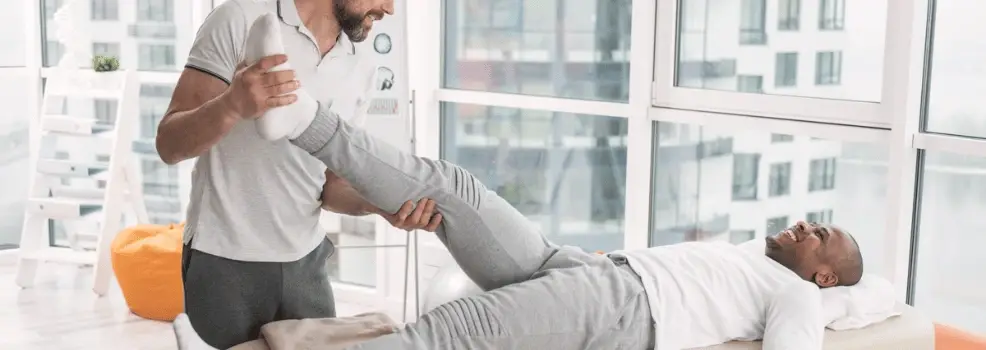
Consult an Expert in Winnipeg
You don’t have to live with the uncertainty or discomfort of a noisy joint. Identifying structural imbalances early can help prevent minor joint friction from developing into chronic wear.
At Bridgwater Physiotherapy, our team performs a comprehensive clinical assessment to identify the biomechanical factors contributing to your symptoms and create a personalized treatment plan aligned with your lifestyle.
Frequently Asked Questions
Why Does My Knee Click Without Pain?
Painless clicking is usually caused by cavitation (bursting gas bubbles) or a tendon harmlessly gliding over a bone. If there is no pain, swelling, or limited movement, it is generally considered a benign joint noise.
Is Knee Clicking a Definitive Sign of Arthritis?
No. While crepitus is common in individuals with osteoarthritis, a noisy joint alone does not confirm an arthritis diagnosis. Many young, active individuals with perfectly healthy cartilage experience clicking due to tight muscles or fluid shifts.
Does Intentional Knuckle or Joint Cracking Damage My Knees?
There is no clinical evidence showing that habitual joint cracking causes damage or leads to arthritis. However, you should avoid forcefully twisting or forcing your knee to pop, as this can strain the surrounding ligaments.
Can I Still Exercise If My Knees Pop?
If the popping is entirely painless and your joint moves freely, it is generally safe to continue exercising. If certain movements like deep lunges or running trigger an ache or swelling, modify your activity and seek medical advice.
Can Physiotherapy Completely Stop Knee Popping Sounds?
If the crepitus stems from muscle imbalances or patellar mistracking, physiotherapy can reduce or even eliminate the sounds. If the clicking is due to normal cavitation or permanent cartilage wear, the sound may persist, but therapy will focus on making your movements entirely pain-free.