
Carpal Tunnel Syndrome is a common issue in Canada. The issue arises from pinching or squeezing of the wrist’s median nerve. Many people first notice symptoms associated with Carpal Tunnel Syndrome at night. Others experience symptoms during repeated tasks such as typing or using tools. In severe cases, surgery may be necessary.
However, for most people with mild to moderate symptoms, non-surgical treatments can help substantially. One of the most effective approaches is wrist physiotherapy treatment. In this blog, we will explain how your physio for Carpal Tunnel Syndrome can help. We will also discuss the causes & symptoms of Carpal Tunnel Syndrome and outline a complete rehabilitation plan.
Carpal Tunnel Syndrome – Symptoms and Causes
Carpal Tunnel Syndrome develops when tissues inside this tunnel swell or thicken. This puts pressure on the median nerve. Think of it like stepping on a garden hose. The water (or, in this case, the nerve signals) cannot flow properly.
What Are the Major Causes of Carpal Tunnel Syndrome?
Several factors can lead to pressure and irritation of the median nerve within your carpal tunnel. Often, it is not one single cause but a combination of several that leads to symptoms.
- Doing the same hand and wrist movements over and over, like typing, sewing, or using tools.
- Conditions such as arthritis, diabetes, or an underactive thyroid can cause swelling or changes that narrow the tunnel.
- Fluid retention, often during pregnancy or menopause, can increase intratunnel pressure.
- A sprain, fracture, or dislocation can alter the space and structures within the carpal tunnel.
- Some people are simply born with a smaller carpal tunnel, making the nerve more vulnerable to pressure.
- Increased body weight is a very common risk factor that can contribute to the condition.
What Are the Major Symptoms of Carpal Tunnel Syndrome?
Carpal Tunnel Syndrome symptoms generally start gradually and come and go. They usually get worse over time. Common feelings include:
- Numbness or tingling: Mostly in the thumb, index, and middle fingers. You might feel a “pins and needles” sensation.
- Pain: Aching or pain in your wrist, palm, or sometimes shooting up your forearm.
- Weakness: You might find yourself dropping objects. Your grip may feel weaker.
- Nighttime waking: Many people shake or “flick” their hands awake at night to relieve the numbness.
Recognizing these signs early is important. It can help you receive appropriate treatment and prevent the condition from getting worse.
How a Physio for Carpal Tunnel Syndrome Helps
Physiotherapists are experts in movement and function. They try to find the root cause of the problem. A physio for Carpal Tunnel Syndrome will create a personalized plan for your wrist. Here’s what you can expect from wrist physiotherapy treatment in Winnipeg:
A Detailed Assessment
Your wrist therapist will start by talking to you. They will ask about your job, your hobbies, and what makes your symptoms better or worse. They will then examine your wrist, check your grip strength, and see how well you can move your fingers and wrist. This helps them understand your specific situation.
Core Carpal Tunnel Rehab Exercises Guidance
This is a core part of your wrist physiotherapy treatment in Winnipeg. Your physiotherapist will guide you through exercises, including:
Tendon Gliding Exercises
These are the carpal tunnel rehab exercises where your physio will guide you through a specific sequence of finger and wrist movements. These exercises are designed to help the flexor tendons glide smoothly through the carpal tunnel, thereby reducing swelling and friction within the confined space.
- Tendon Glides (Type One): They will guide you to curl your fingers deliberately, bending from one knuckle at a time to achieve a full, gentle fist.
- Tendon Glides (Type Two): Your physio will help you keep your fingers straight as you bend at the first knuckles, creating a clean “L” shape before bringing your fingertips to your palm.
Nerve Gliding Exercises
These exercises involve highly controlled movements intended to mobilize the median nerve gently. This improves its ability to slide and move freely through the wrist and forearm. Over time, this gradual process helps to decrease sensitivity, reduce tingling, and restore normal nerve function. They may advise you to:
- Start with your arm by your side, elbow straight, and palm facing forward.
- Slowly bend your wrist backward, pointing your fingers to the ceiling.
- Then, slowly tilt your head away from that shoulder until you feel a very mild pull down your arm.
- Hold for 3-5 seconds, then return to the start position. They recommend 10-15 repetitions, once or twice a day.
Wrist Flexor Stretch
Your therapist may guide you to perform this stretch to lengthen the muscles on the palm side of your forearm. They will instruct you to:
- Hold your arm straight out in front of you, palm facing up.
- Bend your wrist gently. You need to point your fingers toward the floor.
- Gently pull your fingers back with your other hand to feel a stretch in your forearm.
- Hold for 20 to 30 seconds. Repeat 3-5 times daily.
Wrist Extensor Stretch
To balance the muscles, they often recommend this stretch for the upper forearm. Your physio for carpal tunnel in Winnipeg will show you how to:
- Hold the arm straight out, palm facing down.
- Gently bend the wrist. You need to point your fingers toward the floor.
- Use your other hand to pull your hand down until you feel a stretch on the top of your forearm.
- Hold 20-30 seconds and repeat a few times throughout the day.
The Role of Wrist Splints in Carpal Tunnel Syndrome
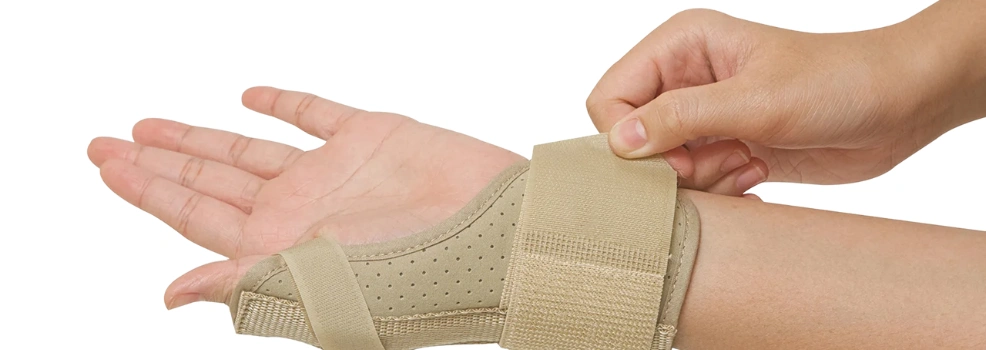
A splint is often a simple and effective part of treatment. It is a brace that holds your wrist in a straight, neutral position. This is the position with the least pressure inside the carpal tunnel. Your physiotherapist will recommend the right splint and guide you on when it will help most.
- Wearing a splint at night is very common. It stops you from bending your wrist while you sleep, which often triggers nighttime symptoms.
- You might also wear it during activities that flare up your symptoms, like driving or typing.
Ergonomic and Lifestyle Advice
Your physio for carpal tunnel in Winnipeg may advise you to:
- Keep your keyboard and mouse low enough so your wrists are straight, not bent upward. Your elbows should be at about a 90-degree angle.
- Set a timer to remind yourself to stop repetitive tasks every 20-30 minutes. Shake your hands out, stretch your fingers, make a fist, and then release. They may advise you to squeeze a rubber ball & hold for 5 seconds.
- Avoid gripping tools, steering wheels, or pens too tightly. Use tools with larger, softer handles.
Conclusion
A physio for Carpal Tunnel Syndrome can provide an effective treatment plan. Through guided exercises, splints, and lifestyle changes, they reduce pressure on the median nerve. This relieves pain, numbness, and weakness, helping you regain function without surgery.
At Bridgwater Physiotherapy in Winnipeg, we begin by assessing your needs, then develop a clear plan with hands-on therapy, guided exercises, and practical adjustments for your daily routine. Contact us today.