Key Takeaways
- Many stable or degenerative meniscus tears may improve without surgery when rehabilitation starts early, and activity is progressed gradually.
- Nonsurgical treatments for meniscus tears often include physiotherapy, strengthening exercises, bracing, activity modification, and short-term pain management.
- Symptoms such as joint locking and catching, swelling, stiffness, and pain during twisting movements may affect knee function during daily activities.
- Meniscus tear physiotherapy usually focuses on quadriceps strengthening exercises, knee stability exercises, mobility work, and controlled low-impact conditioning.
Many people with a meniscus tear improve without surgery when treatment starts early, and rehabilitation stays consistent. Nonsurgical treatments for meniscus tears often include physiotherapy, activity modification, strengthening exercises, bracing, and short-term pain management.
Recovery depends on the type of tear, pain level, and how your knee responds to treatment. A structured meniscus tear treatment plan can help reduce pain, improve knee stability, and support a safer return to daily activity.
Can a Meniscus Tear Heal Without Surgery?
Yes, some meniscus tears can improve without surgery, especially smaller tears and degenerative injuries that develop gradually over time. Conservative treatment for meniscus tear recovery is often recommended before surgical options are considered.
Common Symptoms of a Meniscus Tear
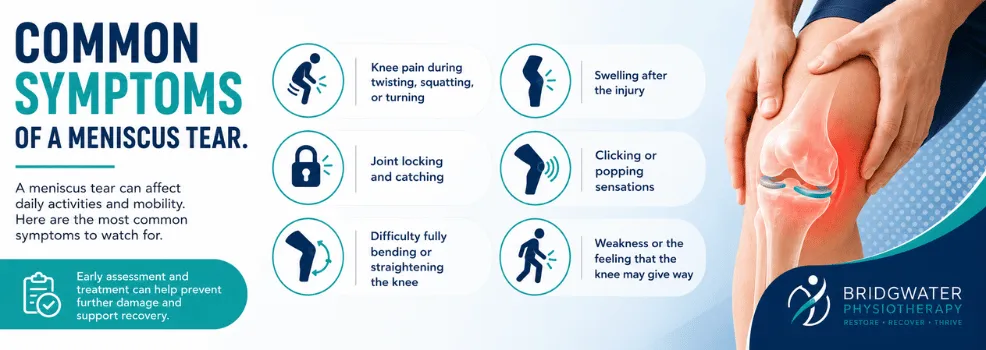
Symptoms of a meniscus tear usually affect how your knee feels during movement. Some people notice pain right away, while others develop swelling, stiffness, or catching over the next few days. Common symptoms include:
- Knee pain during twisting, squatting, or turning
- Swelling after the injury
- Joint locking and catching
- Clicking or popping sensations
- Difficulty fully bending or straightening the knee
- Weakness or the feeling that the knee may give way
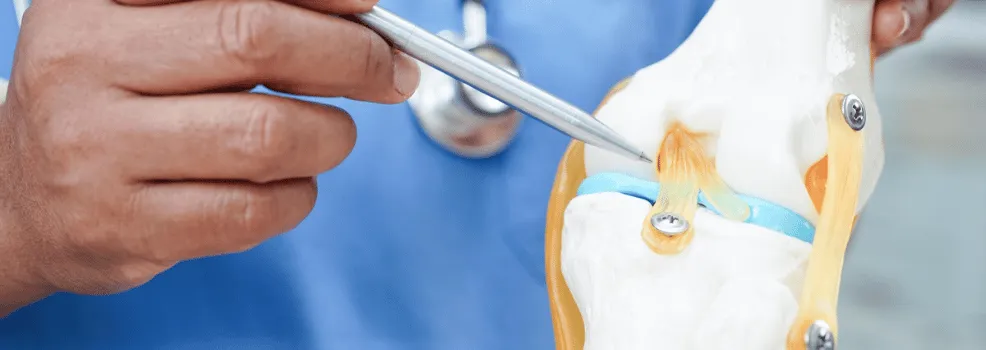
If the pain is on the inner side of the knee, it may point to medial meniscus tear symptoms. If your knee locks, swells more after activity, or feels unstable when bearing weight, the injury needs proper assessment.
Best Nonsurgical Treatments for Meniscus Tears
The best nonsurgical treatments for meniscus tears focus on reducing knee irritation first, then improving strength, stability, and movement. For many stable or degenerative tears, conservative treatment for meniscus tear recovery starts with symptom management before progressing into rehabilitation.
| Treatment Option | Main Recovery Goal |
| RICE Protocol Knee Injury Approach | Help reduce early swelling and discomfort |
| Meniscus Tear Physiotherapy | Improve knee strength, mobility, and movement control |
| Knee Brace for Meniscus Tear | Provide support during walking and daily activity |
| Activity Modification | Reduce stress from twisting, squatting, and impact movements |
| Pain Relief and Anti-Inflammatory Options | Improve comfort during recovery progression |
Meniscus Tear Physiotherapy and Exercises
Meniscus tear physiotherapy helps improve knee control, muscle support, and movement quality during recovery. Exercises for torn meniscus rehabilitation are usually progressed gradually based on pain levels, swelling, and knee stability.
| Exercise Focus | Example Movements | Recovery Goal |
| Quadriceps Strengthening Exercises | Quad sets, straight leg raises | Improve knee support during walking and stairs |
| Knee Stability Exercises | Supported mini squats, balance drills | Improve movement control and stability |
| Hamstring and Glute Strengthening | Glute bridges, hamstring curls | Support lower body strength during activity |
| Mobility and Flexibility Exercises | Heel slides, calf stretching | Reduce stiffness and improve knee movement |
| Low Impact Conditioning | Stationary cycling, guided walking | Maintain mobility with less joint stress |
Physical therapy for torn meniscus recovery should stay within a comfortable range and avoid sharp pain during exercise progression.
What Is the Torn Meniscus Recovery Time Without Surgery?
Torn meniscus recovery time without surgery is often around 6 to 8 weeks for mild to moderate injuries. More severe tears may need several months of rehabilitation. Recovery may take longer when:
- Swelling continues after activity
- Knee strength remains reduced
- Twisting or high-impact activity resumes too early
- Rehabilitation exercises are inconsistent
- Degenerative meniscus tear treatment requires a slower progression
The Bottom Line on Meniscus Tear Treatment
Healing your knee is rarely about complete rest alone. A consistent recovery plan with strengthening exercises and activity modification may help improve long-term knee function. While a home routine is an excellent start, every injury requires a tailored rehabilitation strategy. If mechanical symptoms like catching or swelling continue to limit your daily life, a registered physiotherapist can assess your specific joint mechanics and design a personalized recovery plan.
Frequently Asked Questions
Many mild to moderate meniscus tears improve within several weeks with structured rehabilitation and gradual activity progression.
The safest recovery approach usually includes early symptom management, gradual strengthening, and consistent rehabilitation exercises. Returning to high-impact activity too quickly may delay recovery.
Yes, controlled exercises for torn meniscus rehabilitation may help improve knee stability, strength, and movement without placing excessive stress on the joint.
A knee brace for meniscus tear recovery may improve support and comfort during walking, stairs, and daily activities while the knee continues to heal.
You should consider physiotherapy if knee pain, swelling, stiffness, or instability affects your daily activities. Early rehabilitation may help improve movement and reduce recovery time.