Key Takeaways
- Runner’s knee exercises that focus on quad strengthening and hip stability may help reduce pressure around the kneecap and improve movement control.
- Straight leg raises, wall sits, clamshells, and glute bridges are commonly used in physiotherapy for Patellofemoral Pain Syndrome rehabilitation.
- Tight quadriceps, hamstrings, calves, and IT bands can affect patellar tracking and contribute to knee pain after running.
- Deep squats, downhill running, and high-impact jumping exercises may worsen symptoms during early recovery stages.
- Gradual rehabilitation, controlled exercise progression, and activity modification are often more effective than complete rest for long-term knee pain relief.
Runner’s knee can make running, climbing stairs, or prolonged sitting uncomfortable. Patellofemoral Pain Syndrome causes pain around the kneecap during movement. Targeted strengthening exercises and stretches may help improve knee stability, reduce pressure on the joint, and support recovery. This guide covers runner’s knee exercises, stretches, and practical recovery strategies commonly used in physiotherapy for knee pain relief.
What Causes Runner’s Knee Pain?
Runner’s knee develops when the kneecap does not move smoothly during activity. This places extra pressure on the joint. Many people experience knee pain after running, squatting, or sitting for hours at a desk with bent knees.
Weak thigh and hip muscles can affect patellar tracking and increase stress around the kneecap. Tight muscles around the hips and calves also pull the kneecap out of position. In some cases, chondromalacia patella contributes to this irritation. Common symptoms include:
- Dull aching pain around the kneecap
- Anterior knee pain during running or climbing stairs
- Clicking or grinding sensations
- Discomfort during squats or lunges

Best Runner’s Knee Exercises for Knee Pain Relief
The most effective approach for knee pain relief usually includes both quad strengthening and glute strengthening for runners. Improving hip stability and knee control may help reduce stress on the kneecap during walking, running, and stairs.
| Exercise | Target Area | How It Helps |
| Straight Leg Raises | Quadriceps, Inner Thigh | Commonly used in patellofemoral pain syndrome exercises and VMO exercises because they strengthen the thigh muscles with minimal pressure on the knee joint. |
| Wall Sits | Quadriceps, Glutes | Helps improve muscle endurance and knee stability during daily activities such as stairs and squatting. |
| Step-Ups | Quads, Glutes, Hips | Supports better lower-body control and is often included in knee workouts for runners to improve movement strength. |
| Clamshells | Gluteus Medius | Helps improve hip stability and gluteal strengthening for runners, which may reduce knee pressure. |
| Glute Bridges | Glutes, Core | Helps support pelvic control and improves lower body alignment during running and walking. |
Runner’s Knee Stretches to Reduce Tightness
Tight muscles around the hips and legs can affect patellar tracking and increase pressure on the kneecap during movement. Adding knee stretches for runner’s knee may help improve flexibility, reduce tension, and support better knee movement during running and daily activity.
| Stretch | Target Area | How It Helps |
| Standing Quad Stretch | Front of Thigh | Helps reduce quadriceps tightness, which may decrease pressure on the kneecap during movement. |
| Hamstring Stretch | Back of Thigh | Improves hamstring flexibility, which may help reduce knee joint strain during activity. |
| Calf Stretch | Lower Leg | Helps improve ankle mobility and lower body movement patterns that affect knee alignment. |
| Crossover Stretch | Outer Hip and Thigh | IT band stretching may help reduce tension along the outside of the leg and support smoother knee movement. |
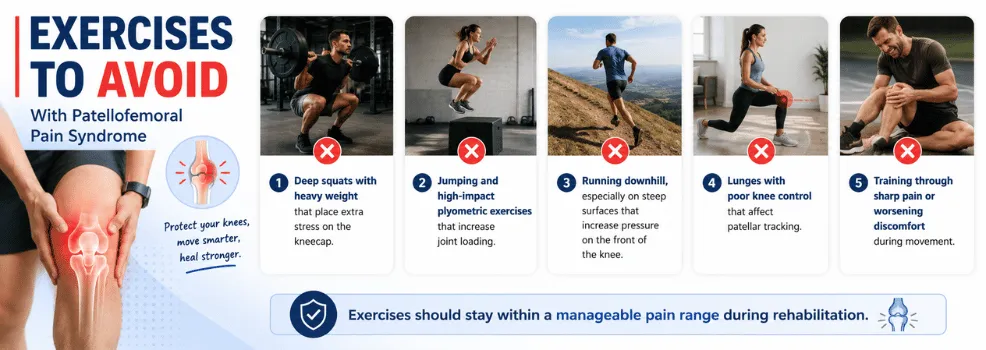
Exercises to Avoid With Patellofemoral Pain Syndrome
Certain movements can increase pressure on the kneecap and worsen knee pain after running. During recovery, reducing high-load exercises may help decrease irritation and support safer movement.
- Deep squats with heavy weight that place extra stress on the kneecap.
- Jumping and high-impact plyometric exercises that increase joint loading.
- Running downhill, especially on steep surfaces that increase pressure on the front of the knee.
- Lunges with poor knee control that affect patellar tracking.
- Training through sharp pain or worsening discomfort during movement.
Exercises should stay within a manageable pain range during rehabilitation.
How to Fix Runner’s Knee Safely
If you are looking at how to fix runner’s knee, the focus should be on reducing irritation while improving strength and movement control. In physiotherapy, many runners notice better symptom control when exercises are progressed gradually instead of pushing through pain early in recovery. Helpful strategies include:
- Reducing running volume temporarily
- Performing regular runner’s knee exercises
- Improving hip stability exercises
- Progressing activity gradually
- Wearing supportive footwear
- Allowing recovery between harder sessions
How Long Does PFPS Recovery Time Usually Take?
Recovery depends on symptom severity and your consistency with rehabilitation. Mild symptoms often improve within 4 to 6 weeks when exercises are performed regularly. More irritated cases require a few months of gradual strengthening. Recovery often takes longer when:
- Running volume increases too quickly
- Exercises are inconsistent
- Hip and quad weakness are not addressed
The Bottom Line on Runner’s Knee Recovery and Exercise
Treating Patellofemoral Pain Syndrome requires a consistent mix of quad strengthening, targeted stretches, and glute activation. While home exercises build a strong foundation for knee pain relief, every runner has unique biomechanics. A physiotherapist can assess your specific gait and create a custom rehabilitation plan. If symptoms continue to limit running or daily activity, a physiotherapist can help guide a more specific rehabilitation plan.
Frequently Asked Questions
The most effective approach usually combines activity modification, quad strengthening, hip stability exercises, and gradual return to running. Consistent runner’s knee exercises often improve movement control and reduce stress on the kneecap over time.
Some runners can continue training with reduced intensity and shorter distances if symptoms remain manageable. If knee pain after running continues to worsen, reducing mileage temporarily may help support recovery.
Not always. Controlled squats within a comfortable range may help strengthen the legs and improve knee control. Deep squats or painful movements should usually be limited during early recovery.
Straight leg raises, wall sits, glute bridges, clamshells, and step-ups are commonly used in patellofemoral pain syndrome exercises. These exercises support quad strengthening, glute control, and better patellar tracking.
Mild symptoms may improve within 4 to 6 weeks with regular rehabilitation. More irritated cases may take several months, depending on activity levels, consistency with exercises for runner’s knees, and overall recovery management.
Both can help during recovery. Short-term activity reduction combined with runner’s knee stretches and strengthening exercises is often more effective than complete rest alone.
Runner’s knee taping may provide temporary support and improve comfort during movement for some people. However, taping works best when combined with strengthening exercises and movement correction strategies.